What maintenance practices extend the lifespan of an RTG Crane (Rubber-Tyred Gantry Crane)?
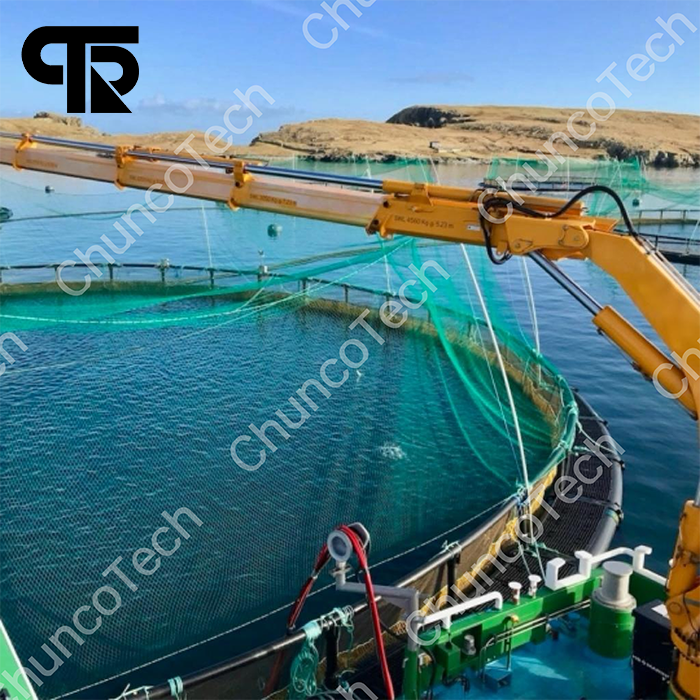
Settling on a derrick, the determination often centers on pivoting arm versus direct arm. Telescopic booms supply ease of use and are advantageous for elevated lifts, but pivoting cranes supply elevated maneuverability, enabling access to tight spaces. Contemplate the field site; if you’re primarily facing barriers or call for more elaborate positioning, a variflex lift is likely the superior option. However, for unrestricted areas and fundamental lifts, a direct boom might result in a more cost-effective alternative.
Knowing Tough Lifting Boom Loaders: Tasks and Benefits
Rigid jib devices represent a particular type of elevating equipment, created for burdensome load operation in hard surroundings. Their foremost attribute is a strong lifting arm makeup, which grants for correct positioning and advanced firmness, especially when performing in limited spaces or at considerable heights. Common uses include bridge construction, industrial campaigns, ventilation land fitting, and facility expansion. The crucial upsides include increased safety, heightened capability, and the power to execute tasks that could be impossible with customary apparatus. This equates to lower costs and elevated enterprise conclusions.
STS Jibs: The Colossi of Waterfront Container Handling
Latest immense STS machines represent the zenith of engineering performance in the naval industry. Designed to quickly load and relocate containers between crafts and the quay, they are key for the efficient operation of modern seaports. Their vertical reach – often exceeding a full hundred yards – and amazing load ability allow them to handle the heaviest container boats currently in employment, fundamentally molding global trade.
Knuckle Boom Cranes: Diversity in Elevating Operations
Articulated machines are distinguished for their exceptional multifunctionality, providing operators with a one-of-a-kind advantage in varied lifting up activities. Containing a folding boom fragment, these sturdy apparatus can maximize around interruptions and locate weights in narrow localities. This quality makes them appropriate for functions in formation, storage, resources jobs, and many other divisions. Finally, knuckle boom apparatus offer a significant resolution to complex elevating stipulations.
Straight Boom Cranes: Exactness and Robustness Explained
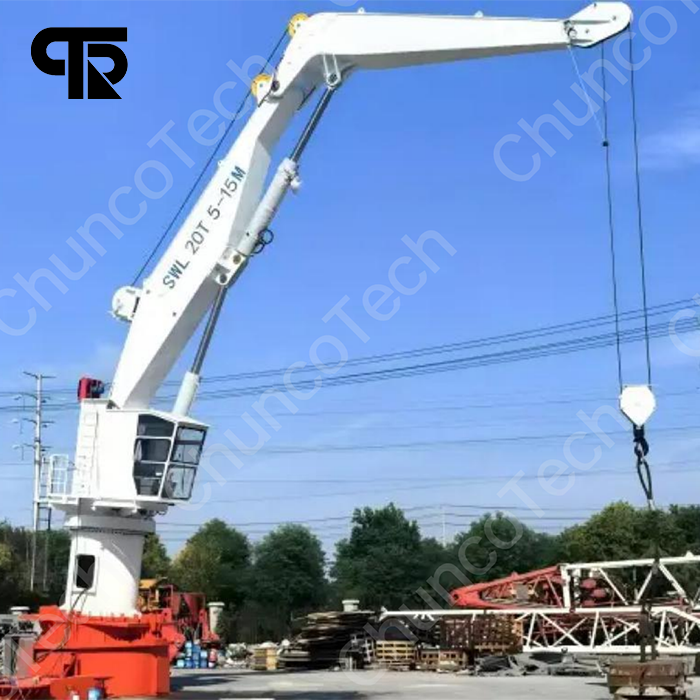
Rigid jib arm cranes are famous for their superior ability to deliver correct lifting and arrangement of loads. In contrast to collapsible models, their easy design produces built-in constancy, making them ideal for uses requiring major quantities of control and limited oscillation. This property is decidedly critical in development sites and domains where tight tolerances are vital.
Stiff Crane Apparatus Advantages: Once Resilience Plays a Role
Traditional arm machines often face challenges with warping, especially when transporting substantial cargo or carrying out at noteworthy radii. However, rigid arm systems deliver a notable edge by decreasing undesirable oscillation. This augmented steadiness converts to protected activities, greater exactness, and a decreased likelihood of weight displacement. Therefore, rigid lifting are ideal for applications where structural resilience is important.
Pier Cranes: Distinct Deep Dive into STS Setup
Specific jetty elevator mechanism represents one essential component of modern transport yards. Present-day STS cranes are high-tech components created to promptly discharge units away from enormous bulk vessels beside coastal vehicles. All activity entails accuracy architecture and coordinated control to sustain reliability and improve flow.
Contrasting Crane Styles: Jointed, Straight, Strong, and Dockside
Selecting the best lifting device for a special use is crucial. While many variants exist, four frequently used classes – folding cranes, direct cranes, rigid cranes, and pier cranes – illustrate significantly different traits. Articulating cranes yield superior maneuverability due to their bent arm, making them befitting for tight environs. Straight cranes supply versatile span through their expandable section, prime for broad heaving needs. Heavy-Duty cranes conserve a steady component, ideal for meticulous positions where rigidity is required. Finally, STS cranes, engineered for shipment movement at terminals, offer massive carrying potency and long range.
- Segmented Apparatus Kinds
- Extendable Machine Types
- Fixed Loader Styles
- STS Hoisting Forms
Particular Evolution Concerning STS Cranes: Shifts and Progress
Through recent decades, STS (Ship-to-Shore) crane design has undergone a notable progression, caused by demands for greater port productivity. Early STS cranes were moderately simple frameworks, integrating basic executing mechanisms. Now, modern STS cranes feature sophisticated technology, including leading control systems, smart positioning competencies, and upgraded safety precautions. A key emergence is the embedding of electronically powered propulsion, reducing environmental impact and boosting operational performance. Moreover, the rise towards teleoperated operation and smart maintenance are altering the realm within STS crane utilization. The prospect sees continued focus on strength economy and the construction of even expanded cranes to serve gradually bigger container trucks.
 STS Crane (Ship-to-Shore Container Gantry Crane)