What key metrics should an ev service scanner monitor to ensure optimal EV performance?
Embarking
A mounting intricacy within current autos obliges a thorough knowledge of diagnostic frameworks, exclusively relating to On-Board Diagnostics II (OBD2) and Tire Pressure Monitoring Platforms (TPMS). Among Europe, Asia, and the US, these technologies operate using different frequencies. OBD2 standards are largely unified globally, chiefly utilizing ISO 9141-50, KWP2000, CAN, and others, but regional uses can introduce minor variations. TPMS, however, is where considerable frequency contrasts emerge. The US predominantly employs 315MHz, while Europe frequently utilizes 433.92MHz, and Asia reveals a more dispersed range including both frequencies and alternative bands. Thus, precise diagnostic tools must be equipped with the facility to comprehend these plentiful frequencies to help effective maintenance and maintenance.
Unpacking TPMS Sensor Frequencies: A Global Guide (Europe, North America, Asia)
Knowing tire pressure tracking system (TPMS) probe channels through the earth appears challenging. Customarily, North nations largely utilize 315 MHz, whereas some updated vehicles employ 433 MHz. Nonetheless, Europe and most of Asia chiefly work on the 433 MHz band, with some jurisdictional variations appearing mainly in certain Asian zones. Thus, important to verify the true wavelength before get hold of TPMS receivers to guarantee accordance and skip possible snags.
Electric Vehicle Scanners: OBD2 Compatibility and TPMS Integration
State-of-the-art electrical car inspection gadgets are increasingly including crucial functionality, regarding regarding both normative On-Board Diagnostics II (OBD2) integration and Tire Pressure Monitoring System (TPMS) integration. Multiple EV transport units utilize OBD2 ports for obtaining fundamental system details, letting technicians and custodians to identify likely issues. Furthermore, coherent TPMS integration provides exact tire volume measurements, furthering to better well-being and energy productivity. This combination of OBD2 interfaces and TPMS deployment shows a serious advance in electrified ride troubleshooting.
Tire Pressure Frequency Distinctions: The Continent vs. American Continent vs. Oriental Region - A Thorough Evaluation
Numerous sensors responsible for sensing tire force—TPMS—operate on distinct radio spectrum, leading to major regional fluctuations. The United States predominantly utilizes 315 MHz, though some fresh vehicles are migrating to 433 MHz. European Union mandates 433.92 MHz, a particular frequency to maintain coordination across jurisdictions. Asia exhibits a diverse landscape, with selected states using 315 MHz, others 433 MHz, and still diverse zones employing a mix of both. This inconsistency produces challenges for repair shops and automobile holders when dealing with replacement TPMS gadgets or diagnostic equipment, necessitating careful confirmation of regional regulations to preclude failures and secure proper working of the TPMS.
Vehicle Scanners for EV Cars: TPMS Readings & Frequency Interpretation
Today's auto readers are quickly growing to handle battery autos, especially focusing on wheel pressure monitoring examination. Unlike middle combustion transport units, electric transport present particular obstacles when it comes to wheel pressure system inspection. Many electric cars use alternative tire monitoring radio bands requiring the detector to unerringly analyze the wavelength in use. This functionality allows professionals to solely see tire info but also ascertain the particular band being broadcasted by the TPMS modules, supporting in correct evaluation of failures.
Europe Tire Monitoring Channels: Which Ought to Recognize?
Navigating the world of auto TPMS can be a difficulty, primarily due to the varying frequencies utilized across European Region, Asia, and the United States. Western European vehicles predominantly use 433.92 MHz, while several Asian countries employ 315 MHz and 433.92 MHz, creating a tangled situation for experts. In the US, both 315 MHz and 433.92 MHz are ordinary, with 315 MHz being more commonplace. Consequently, understanding these regional contrasts is critical for accurately managing TPMS failures and selecting the adequate programming tools.
Advancing the Key Concepts: On-Board Diagnostics II, Renewable-Powered Autos, in addition to Tire Monitoring Module Signal Deciphering
Considering expert auto experts, plainly comprehending certain core concepts with respect to vehicle diagnostics, voltage-powered machine architecture, alongside TPMS instrument transmission identification entails certain fundamental further degree. The latter topics extend around introductory diagnostics, demanding customized gear & understanding so as to rightly spot even correct tricky problems regarding car wheel levels, energy source system efficiency, plus drive unit issue warnings. As well, correctly recognizing tire information transmitter signals – which vary across various manufacturers even trim levels – often necessary for proper synchronization.
Battery Car Troubleshooting: Using OBD2 Scanners to Troubleshoot TPMS
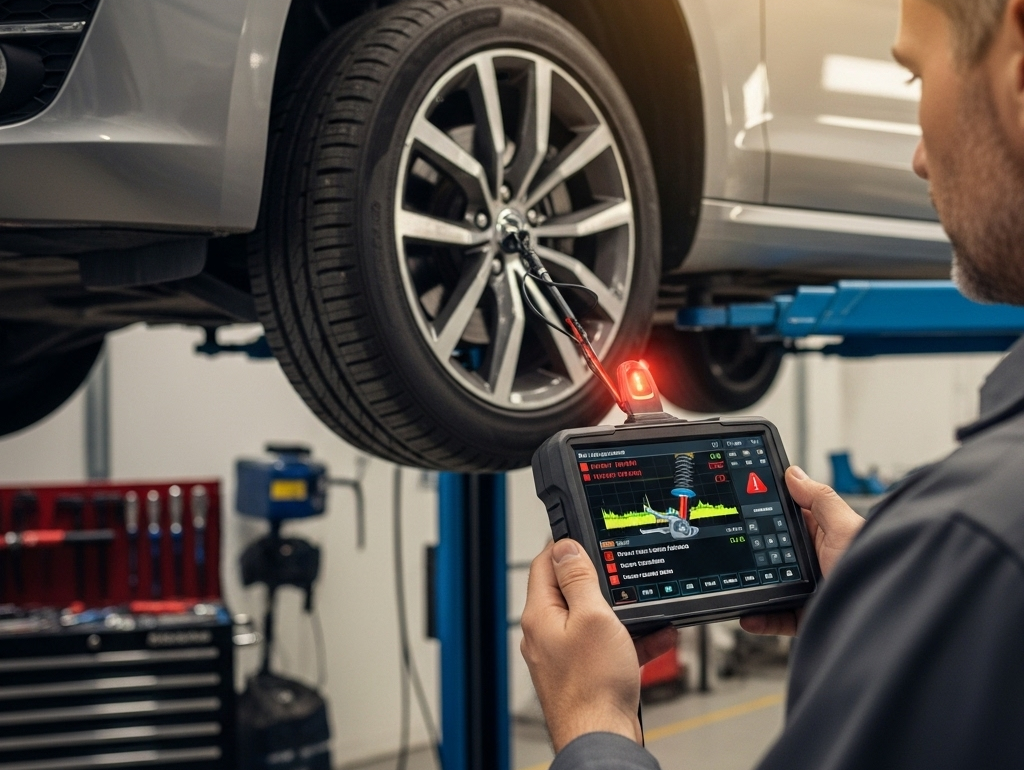
Fixing Tire Pressure Monitoring Systems tire monitoring in electric vehicles electric automobiles often involves more than simply visual inspection. Modern OBD2 scanners offer a ability to extract TPMS data and discover potential malfunctions. Utilizing these machines, technicians can assess fault codes, inspect sensor performance, and even perform sensor tests, allowing for robust diagnosis of pressure sensor defects and minimizing service disruption. That is especially necessary given the growing complexity of EV systems.
Comprehending Tire Pressure Monitoring Systems Waves: A Practical Briefing for European Region, Asia-Pacific, and the US & Canada
Successfully deploying tire surveillance systems throughout Europe, Asian Continent, and United States and Canada demands a full awareness of the varying wave channels they implement. Unlike a harmonized system, the globe often maintains specific bandwidths. Such as the EU tpms frequency europe asia us principally employs 315 MHz and 433 MHz frequency range, while United States and Canada normally operates on hundreds fifteen MHz even though some late models can adopt four hundred thirty-three point nine two MHz. Asian Subcontinent provides a richer complexity situation, with a variety of frequency ranges applied, in accordance with the nation and car manufacturer.
- Deliberate on area rules regarding signal transmission.
- Consult your driver's guide for explicit signal.
- Utilize a monitoring device specialized in evaluating various waves.
