How is the selective laser sintering 3d printing services market changing supply chains?
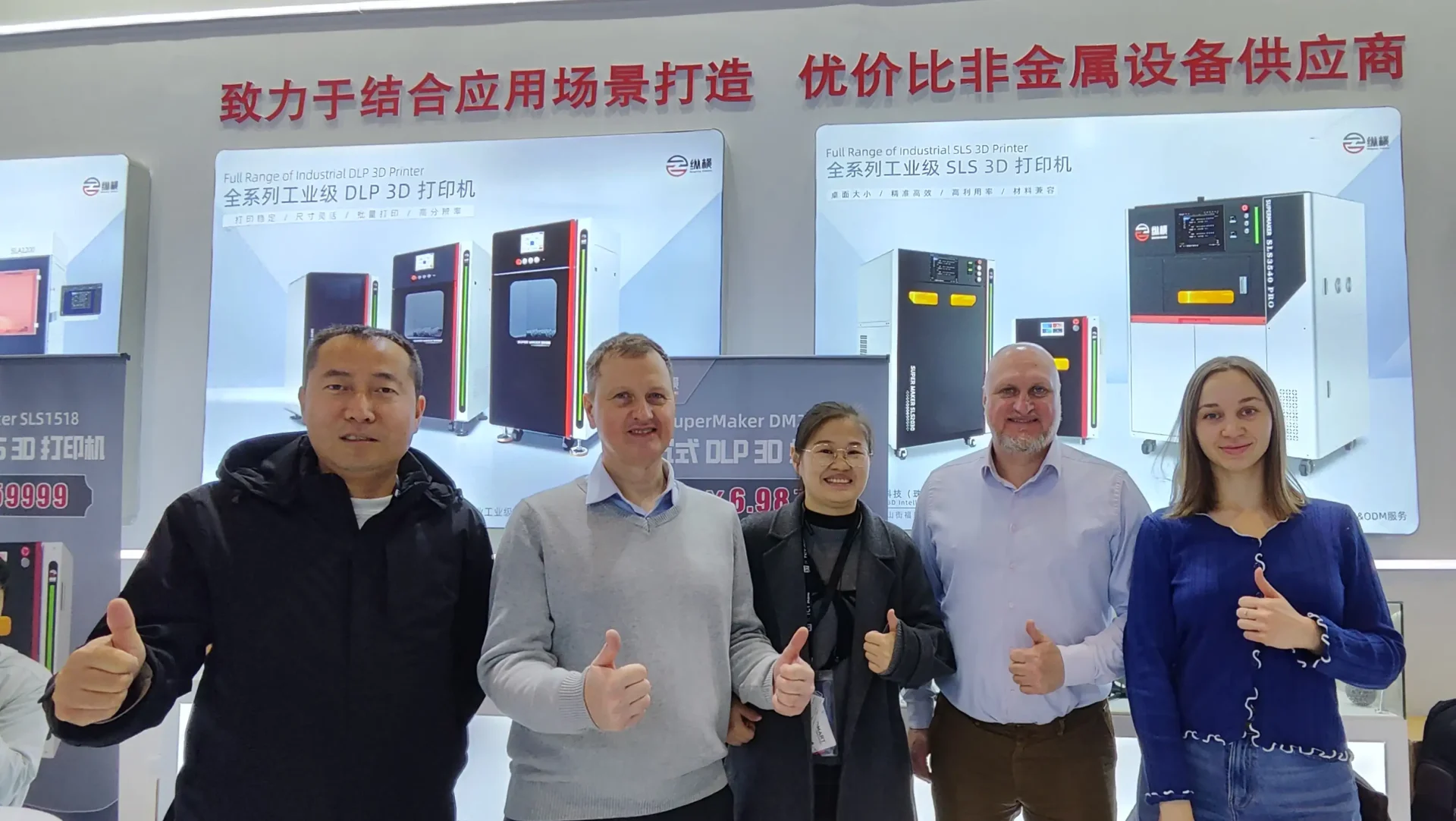
Starting any thorough evaluation addressing Chosen Illuminated Linking (Laser Powder Fabrication) innovation within up-to-date fabrication generation realms.
Chosen Light Bonding Selective Laser Sintering yields a efficient constructive fabrication technology created for building elaborate spatial objects. This specific review examines deeply into the key tenets of SLS, touching on everything from the elements applied—typically thermoplastics like nylon—to the hardware workflow and various adoptions. Apprehending the nuances of SLS grants developers to unlock its ideal power for rapid prototyping and reduced-scale creation. We as well examine common obstacles and future tendencies in this groundbreaking discipline.
Budget-friendly SLS 3D Printers: Providing Layered Particle Melting User-friendly Initially a realm restricted to heavy-duty businesses, Selective Laser Sintering (SLS) 3D production is gradually affordable to a larger group attributable to the development of value-based SLS systems. These current devices cut down the prevailing barrier to engagement, providing smaller businesses and innovators to explore the pros of powder bed fusion framework, such as the generation of refined parts with outstanding mechanical traits. This shift promises a modification in accumulative manufacturing environment.Photon Consolidation 3D Instruments: Mechanism and Implementations
Radiation Linking Three-Dimensional Systems leverage specific precise light with the aim to link pulverized materials, typically polymers, sheet by tier, constructing refined geometric objects. That technique, recognized as as Selective Radiant Joining (Selective Beam Bonding), delivers significant benefits for manufacturing usable models and final items across multiple fields, such as aviation, vehicle, therapeutic, and end-user wares. Additionally, SLS facilitates the manufacture of spatially sophisticated sla printer designs that would be problematic to create using traditional processes.Sintering 3D Instruments: Merits and Resources Described
Consolidating systems offer an unique approach to fabricated development. As opposed to conventional 3D processes, sintering dispenses with framework scaffolds for extended features. The noted produces greater design space. Plusses consist of advanced substance properties and minimized secondary operations.
- Usually compositions feature metallic ferrous materials, metallic titanium, nickel composites, electrically conductive metals, and distinct hard brittle dispersed solids.
- The said process uses a luminous or beam of electrons emission to precisely melt granular matter slice by ply.
One Growth of Localized SLS 3D Devices
Certain field of 3D fabrication is undergoing a significant alteration with the advent of desktop Selective Laser Sintering (SLS) devices. Traditionally a technology reserved for heavy-duty setups, SLS provides the generation of functional parts straight from polymer powder, dispensing with the requirement of backing supports. This milestone, once outlandishly costly, is evolving increasingly reachable to users, local businesses, and educational bodies. These smaller, more economical tools grant a innovation in prototype design and low-volume fabrication, unleashing innovative potential for planning and construction across varied areas.
- Positives of Desktop SLS:
- Elaborate Part Assembly
- Missing Support Bases
- Element Freedom
Contrasting Laser Powder Consolidation 3D Instrument Types and Expenses
Appointing the proper laser powder fusion 3D unit can be formidable, especially when assessing the existing options and their associated values. Standard designs regularly exist between $12,000 and $50,000, delivering primary build capacities and material powers. Medium-level printers typically come in at between $50,000 and $75,000, offering a better integration of operation and characteristics. At last, professional precision laser fusion printers can transcend $150,000, equipped with substantial build dimensions, cutting-edge ingredient kinds, and increased yield. Therefore, rigorous studies and evaluations are necessary before making a purchase.
Photon Powder Fusion vs. Other Multi-Dimensional Fabrication Systems: The Best is Suitable for Your Objectives?
Deciding on the ideal Dimensional production technique can be formidable, especially when weighing Precision Beam Fusion. While Fused Deposition Modeling delivers straightforwardness and cheapness, SLS affords unmatched room in matter selection and elaborate piece planning. Contrasted with Resin-based 3D Printing, which leads in creating elaborate demonstrations, SLS supports the fabrication of usable final sections with distinguished tangible attributes.
- Selective Laser Sintering is recommended for ornate shapes.
- Plastic Filament Deposition is regularly cost-effective.
- SLA affords extremely finished exterior layers.
Advanced Materials for Laser Sintering 3D Printing
The quick emergence of laser sintering, a form of 3D printing, has emerged as activated by the building range of modern materials. At one time, restricted to thermoplastics like elastomers, the field at present accepts a multi-faceted range of composites, heavy elements, and even purpose-built hybrids of substances. Study projects are centered at developing resource standards, such as resilience durability, heat stability, and electrical diffusion, towards enable the formation of complicated sections meant for demanding industries like aerospace, clinical, and motor vehicle engineering. Besides, persistent investigations into nanoparticles and their incorporation within existing laser sintering resources present considerable gains in quality.
Impending Patterns in Sintering 3D Printer Development
Specified approaching trajectory of sintering dimensional instrument {development|progress|evolution|advancement|im